




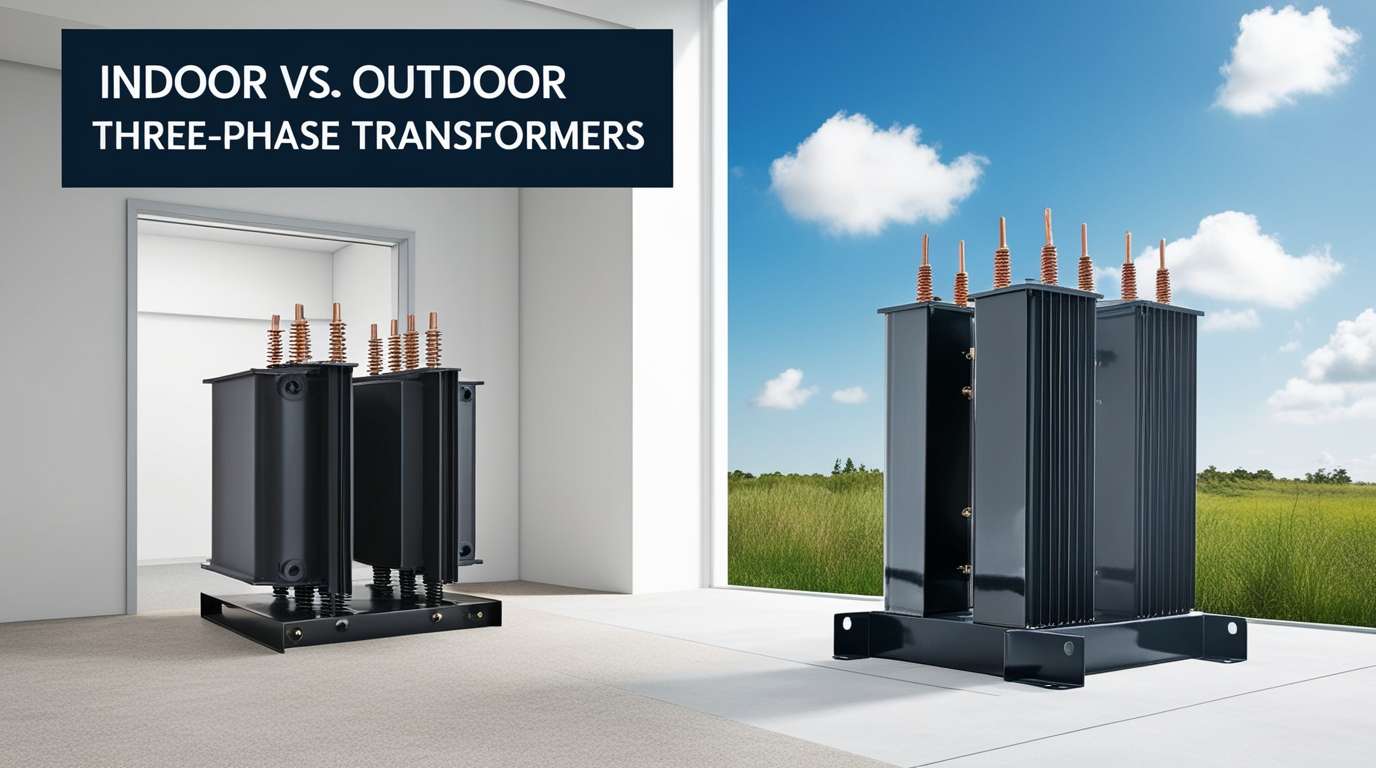
Three-phase transformers step up or down electrical voltage levels for industrial facilities, commercial structures, and central installations. The decision on indoor and outdoor transformers greatly determines the cost of installing the transformers, as well as space demand and maintenance in the long run.
Knowledge of the main distinctions between these types of transformers can help the facility managers and the electrical engineers to make the right choice. The correct option will be made based on the conditions of the sites, budgetary aspects, and functional requirements.
In power distribution systems, three-phase transformers raise or reduce volts. They operate the high-power loads more effectively in the single-phase units. Three-phase power is needed to power industrial, large buildings, and commercial facilities. Such transformers ensure that equipment and machinery are supplied with adequate voltage.
Basic Construction
Each three-phase transformer has coils, cores, and insulation systems. Performance characteristics concern the core material and winding design. During operation, heat is dissipated through cooling systems. Internal components are shielded by enclosures to prevent damage.
Indoor transformers are those installed in buildings or other enclosed areas. The regulated climate ensures that equipment is not exposed to the weather. The weather is pretty constant in terms of temperatures and humidity. This guarantees a more extended service life for transformers.
Most indoor transformers are dry-type, with no liquid coolant. Ventilation allows air to cool by evaporating heat. Lack of oil leads to fires and environmental risks. Occupied buildings are safely fitted with a dry-type design.
Regarding indoor installation, it requires special electrical rooms or spaces. There must be proper ventilation to release heat. Depending on the codes, fire-rated rooms may be necessary. The allocation of space also affects building design and costs.
Noise Considerations
During operation, transformers emit a low hum. There is a need to control noise in occupied areas through indoor installations. Noise-silencing enclosures reduce irritating noise levels. Silence in operation is an important issue in offices and residential buildings.
Outdoor transformers feature weatherproofing that protects against sun, rain, and snow. Heavy cabinets are corrosion-resistant and physically resistant. Moisture intake is blocked by weather sealing. The sturdy building has withstood decades of outdoor conditions.
Liquid or Dry Cooling
Outdoor units can either be immersed in oil or dry. Transformers fed with oil have a higher loading capacity. Outdoor versions are dry types and are utilized in environmentally sensitive locations. Weaknesses in the cooling approach affect capacity and maintenance requirements.
Installation Flexibility
The outdoor transformers are mounted on unstructured concrete pads. The proximity to load centers lowers cable costs. Ground mounting eases the installation process. Outdoor locations offer greater flexibility than indoor units.
Security Measures
Incidentally, there are fences and locked areas to cover unauthorized access. Designs that lack tamper are safeguarding society. The location regulations differ in their security requirements. Outdoor equipment should be visible and properly protected.
Initial Cost Comparison
Outdoor transformers are usually cheaper than corresponding indoor transformers. A weatherproof enclosure is also expensive, but it is less costly than modifying buildings. In-house fire suppression systems and ventilation improvements may be necessary. There is a big difference in the costs of preparing a site.
Installation Expenses
Indoor transformers require installation into buildings and, in some cases, several stories. Outdoor units are mounted on ready pads using a crane. Indoor construction alterations increase labor and material costs. Field installation becomes typically easier and quicker.
Space Utilization
Outdoor transformers take up valuable space that could be used to improve productivity. Indoor units consume space that could generate revenue. In high-priced areas, the real estate business is better suited to outdoor settings. The use of space is important, specifically in congested urban environments.
Maintenance Access
Service access is available in outdoor transformers without building access. Technicians can also work at any hour without interfering with occupants. Indoor maintenance involves coordinating the building's activities. Exposure to the outside makes maintenance and emergency repairs easier.
Fire Risk Management
Indoor dry-type transformers present a lower fire hazard than oil-type transformers. Building codes govern the installations within the building. Fire suppression systems may be compulsory. External location eliminates fire hazards in occupied zones.
Environmental Protection
Outdoor oil-filled transformers are prone to spilling. There are environmental laws that provide for spill prevention. These environmental issues do not affect dry-type units. Proximity to water affects which transformers are acceptable.
Public Safety
Outdoor transformers should not allow people to come into contact with high voltage. Fencing, warning signs, and a secure enclosure are needed. The building's security restricts natural access to indoor installations. There are particular safety needs for each type of location.
Extreme Weather
Severe climatic conditions undermine the performance of outdoor transformers. Very cold or very hot areas may prefer indoor installations. Outdoor equipment also has humidity and salt air as factors in its longevity. It has climate conditions that determine which transformers are best.
Available Land
In densely populated cities, there might not be areas where transformers can be installed outdoors. Indoor options involve constructing roofs or basements. An outdoor location is the typical location in suburban and industrial areas. Practical decisions are made based on the available real estate.
Local Regulations
Outdoor electrical equipment may be limited by zoning. Transformers in some regions need to be placed in vaults. Building codes detail the requirements of installations inside the building. Selecting decisions are influenced by regulatory compliance.
Energy Productivity and Maintenance
Both designs have the same efficiency at the same capacity. Different designs have different cooling system efficiency. Indoor control of climatic units uses power. The costs of operating are less about location and more about load.
Outdoor transformers need regular cleaning to remove dirt and debris. The indoor units work in a cleaner environment. Oil-filled ones need to be tested and replaced. Maintenance cost and occurrence are design and environmental phenomena.
Lifespan Expectations
Indoor transformers have a lifetime of 25-35 years when well-maintained. Weather-exposed outdoor units may need to be replaced within 20-30 years. Equipment lifetime is of great concern to the environment. Maintenance and quality are more relevant than location itself.
Assessing Your Needs
Assess space, budget conditions, and site. Take a look at both short and long-term expenses. Local regulations can specify specific solutions. Unique sites make the right choice.
Consulting Experts
The electrical engineers are professional examiners of specific requirements. They work out loads, site assessment, and solutions. Professional advice would stop costly errors. Code compliance and optimal performance are ensured through professional design.
Weighing Trade-Offs
There is no universal solution that will fit all of them. An indoor transformer is applicable to urban buildings that have limited space. Industrial facilities and campuses are suitable locations to have outdoor units. Sort out conflicting forces to an optimal compromise.
Site Preparation
Outside installations must be on flat concrete slabs and well-drained. Structural support and ventilation are needed indoors. Electrical connections should be designed. Proper preparation is important to good installation.
Delivery and Rigging
Large transformers will require specialized equipment for delivery and installation. Structural assessment may be required for building access to the indoor units. Outdoor placement is less complicated than in practice. Installation problems are avoided through logistics planning.
Expansion Plans
When allocating transformers, anticipate future power requirements. Additions are easier in outdoor installations. The constraint on indoor space could limit future growth. Avoiding replacement too early is a planning issue.
Technological Changes
The more recent transformer designs are efficient and smaller. The original selection should be considered for future upgrades. Technological development can prefer one solution over another. Needs change over time and are met through flexible planning.
The selection of indoor and outdoor three-phase transformers hinges on various aspects such as space, budget, weather, and regulations, to name a few. The appropriate choice of the right transformer will enable you to achieve efficient operations at all costs and the use of space, depending on your particular application.
Transformers are everywhere. They are installed on utility poles, on walls, and in buildings. The
READ FULLImagine a city's water system. High pressure moves water across miles of pipe. Low pressure deliv
READ FULLThe kVA rating is one of the earliest numbers that is used when purchasing or ordering a single-p
READ FULL